
How Graphics and Sound Shape the Gaming Experience
Introduction
Immersion in gaming can be defined as the player’s ability to become fully absorbed in the virtual environment and narrative, creating a compelling experience that extends beyond mere interaction with the game mechanics. It is a critical component of player enjoyment, influencing not only how well players connect with the game but also how they perceive and respond to challenges, stories, and environments. The deeper the sense of immersion, the more invested a player is in the gaming experience, which can significantly enhance satisfaction and overall enjoyment.
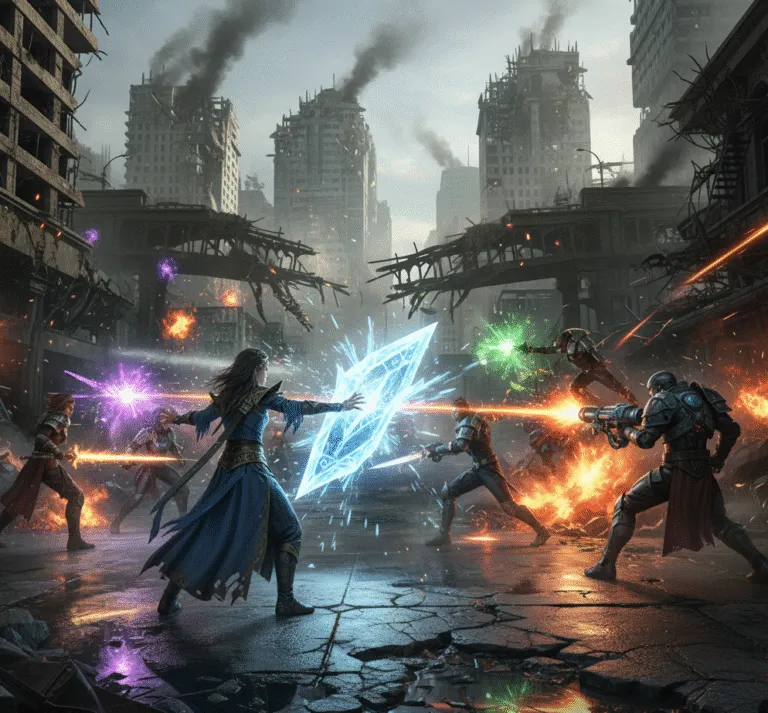
Several elements play a pivotal role in driving this immersion, with visual design, graphics quality, and soundtracks being the most influential. High-quality graphics and innovative visual design captivate players, providing a realistic or artistically compelling representation of the game world. This can evoke strong emotional responses, allowing players to connect with in-game scenarios and characters as they navigate through challenges and plotlines. The way objects, environments, and characters are presented visually can transport a player into another world, making gameplay more engaging.
Additionally, soundtracks and audio effects augment the immersive experience by creating an atmospheric backdrop that responds dynamically to in-game actions. Music can set the tone of the game, influencing emotions and enhancing narrative moments. Effective sound design allows players to hear the subtleties of the environment, further anchoring them in the game world. Together, these factors establish a multi-sensory experience that boosts immersion, making players feel as if they are genuinely part of the game instead of merely spectators. This blog post will delve into these elements before comparing how they have evolved from older to modern gaming experiences.
Visual Design: The Foundation of Immersion
Visual design serves as a crucial foundation in creating immersive gaming experiences that capture players’ imaginations. The art style of a game is one of the most striking aspects; it sets the tone and illustrates the world in which players adventure. From pixelated graphics of classic titles to the hyper-realistic visuals of contemporary gaming, the evolution of art styles plays a significant role in engaging the player. For instance, retro games utilize sprite graphics that evoke nostalgia, while modern games often favor detailed textures and vibrant colors to create rich, multifaceted environments.
Furthermore, an effective user interface (UI) design can enhance or diminish immersion. A well-thought-out UI should be intuitive and seamlessly integrated, allowing players to engage with the game without distraction. In contrast, cluttered or unintuitive interfaces can disrupt immersion and lead to player frustration. Developers must balance aesthetic appeal with functionality to ensure that players remain focused on the immersive experience rather than struggling with unresponsive controls or misleading information.
Environmental storytelling is another essential aspect of visual design. By crafting landscapes that tell a story through visual cues, developers can provide players with layers of narrative that encourage exploration and discovery. Every element, from abandoned buildings to natural landscapes, contributes to the overall atmosphere and encourages players to reflect on the game world. When players can interpret these visual elements, their level of engagement deepens, further enhancing their immersion in the game.
In comparison, modern titles frequently capitalize on advanced graphical technologies, such as rendering techniques and three-dimensional modeling, to enhance player experiences significantly. This shift underscores the increasing demand for visual fidelity in gaming, allowing for deeper emotional connections and a more profound sense of presence within crafted worlds. As technology continues to advance, the potential for creating immersive visual experiences in video games remains an exciting frontier for both developers and players alike.
Graphics Quality: Technological Advancements Over Time
The evolution of graphics quality in video games serves as a testament to the rapid advancements in technology over the past few decades. Early gaming platforms provided pixelated graphics, characterized by their simple yet charming designs, which were reflective of the technological constraints of the time. Games such as “Pac-Man” and “Super Mario Bros.” featured minimalistic aesthetics, primarily due to the limitations in processing power and memory. As hardware capabilities expanded, so did the potential for richer and more detailed graphical representations.
The introduction of 3D graphics in the 1990s marked a pivotal shift in gaming design, allowing for a more immersive experience. Titles such as “Doom” and “Quake” showcased the ability to create three-dimensional environments, which enhanced player engagement through deeper spatial awareness. This leap in technology paved the way for continuous enhancements in graphics and rendering techniques. Improvements in polygon count, texture resolution, and lighting significantly contributed to the hyper-realistic visuals enjoyed in contemporary gaming.
Higher resolutions, particularly with the advent of 4K and 8K displays, have allowed developers to push the boundaries of visual fidelity further. Players now experience games with breathtaking details, from lifelike character models to intricate environments that are visual marvels. Additionally, real-time ray tracing technology has transformed how light and shadow are rendered, providing dynamic reflections and realistic lighting that significantly improve immersion.
When comparing iconic older games with their modern counterparts, the improvements are vividly apparent. For instance, the “Final Fantasy” series showcases this evolution; from the 16-bit graphics of “Final Fantasy VI” to the photorealistic visuals seen in “Final Fantasy XV,” the changes highlight how technological advancements have dramatically enriched the gaming experience. Consequently, graphics quality plays a crucial role in both immersion and player enjoyment, embodying the continual pursuit of realism in gaming.
The Role of Soundtracks in Player Engagement
Soundtracks play a crucial role in shaping the gaming experience, significantly contributing to both player immersion and engagement. The emotional tone set by music and sound effects can enhance the overall atmosphere of a game, guiding players through the narrative in ways that visuals alone cannot achieve. For instance, a well-crafted soundtrack can evoke feelings of joy, tension, or nostalgia, deepening the connection players have with the game’s characters and story. This relationship between sound and emotion is especially noteworthy in today’s gaming landscape where narrative-driven and role-playing games often rely on music to convey pivotal moments within the story.
Historically, the evolution of soundtracks in gaming reflects broader changes in technology and artistry. Earlier games were limited by hardware constraints, often producing simplistic chiptune soundscapes that, while charming, lacked the complexity found in contemporary compositions. Despite these limitations, many older games crafted unforgettable musical motifs that players still recognize today. Titles like “Super Mario Bros.” and “The Legend of Zelda” featured memorable tunes that contributed to the gameplay experience, establishing a foundation upon which future soundtracks were built.
In contrast, modern video game soundtracks utilize advanced technology and an array of musical genres to create intricate compositions. Composers such as Nobuo Uematsu and Yoko Shimomura have pioneered the integration of orchestral scores and electronic music, resulting in sophisticated pieces that resonate with players on multiple levels. This evolution showcases how soundtracks are not merely background audio but are fundamental to narrative delivery, emotional engagement, and enhancing the overall enjoyment of the game. As the industry continues to grow, so too will the importance of soundtracks in fully engaging players and enriching their gaming experiences.
The Psychological Effects of Visual and Auditory Elements
In the realm of video games, visual design and auditory components serve as critical elements that significantly influence player immersion and enjoyment. These sensory aspects are intertwined with psychological principles that govern how individuals engage with digital environments. A player’s emotional response is often closely linked to both visual and auditory stimuli. Research indicates that immersive graphics can create a compelling flow state, where players lose themselves in the game, seamlessly transitioning between challenge and skill. This flow state is often characterized by feelings of control, creativity, and enjoyment, which are essential for a fulfilling gaming experience.
The aesthetics of a game’s visual design not only impact gameplay but also evoke emotions that resonate deeply with players. For instance, bright and vibrant colors may elicit feelings of happiness and excitement, while darker tones might create tension or foreboding. Coupled with auditory elements, such as soundtracks and sound effects, this multi-sensory approach can transport players into diverse realms of experience. High-quality graphics paired with immersive sound designs enhance sensory immersion, prompting players to engage more fully. Psychological research supports the notion that when players are emotionally stimulated, retention and engagement levels tend to increase, leading to deeper connections with the game.
Player testimonials further illuminate the effectiveness of these components. Many gamers report that impressive graphics coupled with thematic scores significantly enhance their emotional engagement. This blending of visual artistry and auditory richness contributes to an overarching sense of presence within the game world. As players perceive their surroundings vividly through quality graphics and feel the pulse of the soundtrack, their minds and emotions are entrained, leading to a more profound and enjoyable gaming experience. Thus, understanding these psychological effects is key to optimizing design strategies that cater to player immersion and satisfaction.
Critical Reception: How Design Influences Game Reviews
In the realm of video gaming, the significance of visual design, graphics quality, and soundtracks cannot be understated, as these elements play a pivotal role in shaping a game’s critical reception. Reviewers often assess these aspects to determine the overall experience, which can greatly influence both a game’s legacy and its sales performance. Notably, modern titles like “The Last of Us Part II” and classic games such as “The Legend of Zelda: Ocarina of Time” exemplify how aesthetic elements contribute to the success and lasting impact of a game.
The visual design in “The Last of Us Part II” has been lauded for its exceptional graphics, portraying a post-apocalyptic world with stunning realism. Critics acknowledged how the gritty, intricate details enhanced the narrative, fully immersing players in its environment. This level of craftsmanship resonated with audiences, leading to multiple accolades and strong sales figures, emphasizing the direct correlation between quality design and critical reception.
Conversely, “The Legend of Zelda: Ocarina of Time,” while released in 1998, continues to receive acclaim primarily due to its groundbreaking graphics for the time and memorable soundtrack. The game’s design contributed significantly to its gameplay, creating an engaging experience that captivated players. As a result, it remains a benchmark in the industry, influencing countless future titles. Game reviewers still reference its artistic achievements when evaluating modern games, demonstrating how early design choices have shaped industry standards.
Ultimately, visual design, graphics quality, and soundtracks are integral to a game’s success. They greatly affect how games are perceived by critics, subsequently influencing their reception and overall legacy. Thus, developers should pay keen attention to these elements in their creative processes, considering their potential to enhance player immersion and enjoyment.
Cross-Platform Experiences: A Look at Different Gaming Mediums
The gaming landscape has evolved significantly, presenting players with an array of platforms, including personal computers (PCs), consoles, and virtual reality (VR) systems. Each of these mediums offers unique advantages and challenges concerning visual design, graphics quality, and soundtracks, ultimately influencing player immersion and enjoyment. Understanding these differences is crucial for assessing how each platform contributes to the overall gaming experience.
Starting with PCs, they generally boast superior hardware capabilities, allowing for higher resolutions, greater graphical fidelity, and more intricate visual designs. Players can customize their setups, enabling them to optimize performance according to their preferences. This flexibility often results in more immersive experiences, where intricate details and crisp visuals enhance the storytelling and emotional engagement of the game. Additionally, the availability of high-quality sound systems on PCs can elevate the auditory experience, creating a more profound connection to the game world.
Consoles, while limited by standardized hardware, also provide compelling experiences. Developers typically tailor their games specifically for each console, optimizing graphics to achieve a balance between performance and visual impact. Console gaming often emphasizes ease of access and social connectivity, which can foster a different type of immersion. However, the graphics quality may not match that of high-end PCs, and soundtracks may be simplified due to hardware constraints.
Lastly, virtual reality represents a distinct frontier in gaming. The visual design in VR requires meticulous attention to ensure that graphics are not only high-quality but also perform at real-time speeds to prevent motion sickness. Soundtracks in VR are essential for context and atmosphere, enhancing the lifelike experience that VR aims to provide. This medium can create a uniquely immersive environment, challenging the traditional boundaries of player engagement.
In summary, the impact of visual design, graphics quality, and soundtracks varies across different gaming platforms. Each medium contributes uniquely to the player’s immersion and enjoyment, influenced by its specific hardware capabilities and design optimizations. Understanding these differences can enhance the appreciation of the gaming experience, regardless of the platform chosen.
Future Trends: What Lies Ahead for Visual and Auditory Design
As the gaming industry evolves, the integration of innovative visual and auditory designs continues to push the boundaries of player experience. Emerging technologies such as augmented reality (AR), virtual reality (VR), and artificial intelligence (AI) are reshaping how gamers interact with digital content, promising a future of enhanced immersion and enjoyment. AR has the potential to blur the lines between the virtual and real worlds, allowing players to engage with game elements superimposed onto their physical environments. This technology can provide a more tangible connection to gameplay, enhancing both emotional and physical immersion.
In the realm of VR, advancements are already making significant strides. With developments in headset technology and motion tracking, players can expect increasingly realistic interactions within virtual worlds. The leap in graphics quality combined with spatial audio systems will serve to create a more convincing atmosphere, fully enveloping the player in the gaming experience. This environment of realism encourages deeper emotional bonds with the narrative and characters, enhancing overall enjoyment.
Moreover, AI-driven content creation is set to revolutionize game design. By leveraging machine learning algorithms, developers can dynamically adjust visual elements and soundtracks based on player reactions and preferences. This capability means that each player’s experience can be unique, tailored to their specific interactions and emotional responses throughout gameplay. As AI continues to advance, we may see more sophisticated animation and sound design that adapts in real-time to maintain player engagement.
The future of visual and auditory design in gaming is poised for transformative developments. As technology continues to offer immersive experiences, it will redefine the way players connect with virtual worlds, ensuring that enjoyment and engagement remain at the forefront of game design.
Conclusion: The Holistic Experience of Gaming
As we have explored throughout this article, the immersive quality of video games is significantly influenced by the interconnectedness of visual design, graphics quality, and soundtracks. Each element plays a pivotal role in shaping the overall experience, working in harmony to engage players and enhance their enjoyment. The artistry and craftsmanship involved in game development cannot be overstated; it is this meticulous attention to detail that creates the rich, interactive worlds that players come to cherish.
In historical contexts, the evolution of gaming graphics has mirrored advancements in technology, shifting from simple pixelated images to rich, detailed environments that evoke strong emotional responses. This transformation is complemented by the development of soundtracks, which have become more sophisticated, adding layers of depth and narrative to the gaming experience. Game developers have increasingly recognized that players seek not only entertainment but also a means to connect with characters and stories on a profound level, making these elements essential to the design process.
Modern games exemplify the significance of visual design, graphics quality, and soundtracks, often investing substantial resources into creating seamless experiences that capture players’ imaginations. The synthesis of these components generates an immersive atmosphere that transports players beyond mere gameplay into a realm where participation and emotional investment are heightened. Thus, understanding the holistic experience of gaming necessitates an appreciation for the intricate relationships among these elements.
Ultimately, the impact of visual design, graphics, and soundtracks extends far beyond aesthetics; they are foundational in fostering player immersion and enjoyment. As the gaming industry continues to evolve, it remains crucial for developers to prioritize these artistic components to create memorable experiences that resonate with players across diverse genres and platforms.